
Hollywood Union Strikes: Why They Happen and Who Wins
By Newsroom, Entertainment Desk — Published August 8, 2026
Table of Contents
- The Unions That Shape Hollywood Production
- Why Strikes Erupt: The Economic Triggers
- The Mechanics of a Hollywood Strike
- Who Actually Wins When the Cameras Stop?
- Frequently Asked Questions
When production grinds to a halt across Los Angeles soundstages and writers stop delivering scripts, Hollywood union strikes make headlines that ripple far beyond the entertainment industry. These labor disputes affect everything from streaming platforms to box office results, from television shows and streaming schedules to the livelihoods of thousands of workers who keep cameras rolling and sets running. Understanding why these strikes happen—and what they accomplish—requires looking past the celebrity updates and red carpet glamour to see the economic machinery underneath.
At their core, Hollywood union strikes are about leverage. The entertainment industry generates billions annually through film releases, TV series premieres, music chart rankings, and the increasingly dominant streaming economy. Workers who create this content—writers, actors, directors, crew members—periodically renegotiate the terms under which they labor. When negotiations break down, strikes become the ultimate bargaining tool.
The Unions That Shape Hollywood Production
Several major unions represent different segments of entertainment workers. The Writers Guild of America covers screenwriters for film and television. SAG-AFTRA represents actors across all media. The Directors Guild of America speaks for directors and their teams. Below-the-line workers—cinematographers, editors, grips, electricians, costume designers—belong to the International Alliance of Theatrical Stage Employees and other trade unions.
Each union negotiates separate contracts, typically every three years. These agreements govern wages, residuals (ongoing payments when content is reused or sold), health benefits, pension contributions, and working conditions. The negotiation cycle means strikes rarely happen simultaneously, though recent years have seen closer coordination as unions face similar challenges from industry changes.
The power dynamic is straightforward: studios and streaming platforms need content to fill screens and attract subscribers. Workers provide that content. When contracts expire, both sides calculate whether they can afford a work stoppage. Studios lose production momentum and release schedules slip. Workers lose paychecks immediately, even if they might gain better terms long-term.
Why Strikes Erupt: The Economic Triggers
Follow the money. Most Hollywood strikes trace back to how revenue gets divided when the business model shifts. Residuals provide a clear example. When television operated on a broadcast model with endless reruns, actors and writers received payments each time an episode aired. Cable introduced new questions about how to calculate those payments. Streaming platforms upended the model entirely.
A show on a streaming platform might be watched millions of times, but there’s no “rerun” in the traditional sense—it simply exists in a library. How should creators be compensated? Studios often propose flat fees or minimal residuals, arguing the economics differ from broadcast. Unions counter that successful streaming content generates enormous value through subscriber retention and growth, and creators deserve a meaningful share.
Technological change also sparks conflict. Artificial intelligence now generates script drafts, digitally recreates actors’ likenesses, and automates post-production tasks. Workers see existential threats to their professions. Studios see cost savings and creative tools. These opposing views produce irreconcilable demands at the bargaining table.
Job security matters too. The shift toward limited series and shorter seasons means less steady work. Writers’ rooms have shrunk. Production schedules compress. Many entertainment professionals work gig-to-gig without the sustained employment that once characterized Hollywood careers. Unions push for minimum staffing levels and guaranteed weeks of work. Studios resist what they view as inefficient mandates.
Common Strike Demands Include
- Higher minimum compensation rates adjusted for inflation and industry profits
- Revised residual formulas that reflect streaming economics and international distribution
- Restrictions on artificial intelligence replacing human creative work or using performers’ likenesses without consent and compensation
- Mandatory minimum staffing levels for writers’ rooms and production crews
- Improved health insurance and pension contributions as employment becomes less stable
- Transparency requirements so creators can see how their content performs on streaming platforms
The Mechanics of a Hollywood Strike
Strikes don’t happen impulsively. Union leadership negotiates for months, often extending expired contracts while talks continue. If an impasse occurs, members vote on whether to authorize a strike. A strong authorization vote—often requiring a supermajority—gives negotiators credibility when they return to the table.
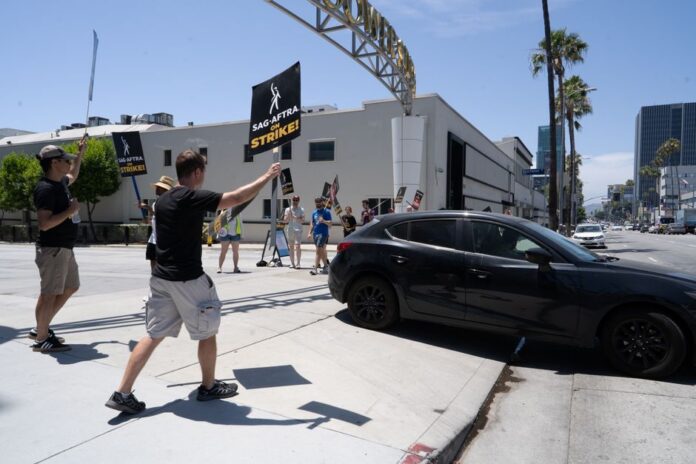
Once a strike begins, union members cannot work under the struck contracts. Writers stop writing. Actors don’t show up for shoots or promotional appearances for entertainment awards shows. Picket lines form outside studio gates. The goal is economic pressure: delay production enough that studios lose more money from the strike than they would from meeting union demands.
Not everyone stops working. Different unions have separate contracts, so a writers’ strike doesn’t automatically halt filming if actors and crew remain on the job—though many productions need all pieces functioning. Reality television, news programming, and talk shows often continue with non-union labor or different agreements. International productions outside union jurisdiction proceed normally.
The public often sees only the visible disruptions: delayed film releases, interrupted TV series premieres, missing stars at promotional events. Behind the scenes, the calculation is coldly financial. Studios project lost revenue against the cost of concessions. Unions count how long members can survive without paychecks and whether public sympathy will pressure studios to settle.
Who Actually Wins When the Cameras Stop?
Declaring winners in Hollywood labor disputes depends on the timeframe. Short-term, everyone loses something. Workers forfeit income during the strike. Studios lose production value and market opportunities. Ancillary businesses—caterers, equipment rental houses, local restaurants near studios—suffer collateral damage. Box office results suffer when release calendars thin out. Streaming platforms run through their content libraries faster than planned.
Long-term outcomes are murkier. Unions that hold out typically win some version of their demands, though rarely everything sought. A strike that secures better residuals or AI protections can improve members’ earnings for years. But those gains must be weighed against months of lost wages and the risk that some workers never recover financially from the stoppage.
Studios sometimes achieve their own quiet victories. A strike provides cover for layoffs and restructuring. It clears content pipelines, allowing companies to recalibrate strategies. The pause can actually help balance sheets if a company was overextended on production commitments. And any settlement that falls short of union demands represents a form of studio success.
The broader entertainment industry landscape shifts during strikes. Independent productions without union contracts gain opportunities. International productions in Canada, the UK, or Australia attract projects that might have filmed in California. Streaming platforms with deep content libraries weather strikes more easily than traditional studios dependent on continuous production. These competitive advantages can outlast the strike itself.
Public perception plays a role too. Strikes that generate sympathy—workers fighting for fair treatment against wealthy corporations—strengthen union bargaining power and potentially influence political support for labor-friendly policies. Strikes seen as greedy or disruptive can erode public goodwill, making future negotiations harder.
Frequently Asked Questions
How long do Hollywood union strikes typically last?
Duration varies widely depending on the economic stakes and each side’s resolve. Some strikes end within weeks when both parties quickly recognize the costs outweigh the benefits of holding out. Others stretch for months, particularly when fundamental issues like new technology or business model changes are at stake. The length often reflects how much financial runway each side has—unions need members who can survive without paychecks, while studios need content pipelines that can withstand production gaps. Historical strikes have ranged from a few weeks to half a year, with the longest disputes occurring when structural industry changes made compromise difficult.
Do actors and writers get paid during a strike?
No, union members do not receive wages for work they’re prohibited from performing during a strike. This creates immediate financial pressure on workers, particularly those without substantial savings or alternative income sources. Some unions maintain strike funds that provide modest assistance to members, but these payments rarely match regular earnings. The financial strain is intentional on both sides—it motivates workers to question whether the strike is worth the sacrifice while simultaneously demonstrating to studios that members are committed enough to endure hardship. Many entertainment professionals take temporary jobs outside the industry or rely on savings and support networks during work stoppages.
Can studios hire replacement workers during a Hollywood strike?
Legally, studios can hire non-union workers, but practical and reputational constraints limit this option. For creative positions like writers and actors, replacing striking talent with non-union alternatives often produces lower-quality content that audiences notice. The entertainment industry also relies on relationships and reputation; professionals who cross picket lines risk being ostracized once the strike ends. Some types of production—reality television, news, international shoots—can continue with non-union labor or under different contracts. But for major film releases and premium television productions, the specialized skills and star power of union members make replacement difficult. Studios typically prefer to wait out strikes rather than damage long-term industry relationships.
How do streaming platforms change the strike equation compared to traditional studios?
Streaming platforms have altered strike dynamics in several ways. Their global libraries of existing content provide a buffer—subscribers still have thousands of hours to watch even if new production stops. This reduces immediate pressure to settle compared to traditional studios that needed continuous output for theatrical releases and broadcast schedules. However, streaming companies also face unique vulnerabilities: they depend on subscriber growth and retention, and a prolonged content drought eventually causes churn. The streaming business model has also created the core disputes that trigger modern strikes, particularly around residuals and compensation structures that don’t fit traditional formulas. These platforms operate with different economics than legacy studios, sometimes making them more willing to endure strikes, other times more motivated to settle quickly to maintain their growth trajectories.
The cycle will continue. As long as entertainment generates profits and technology reshapes how content reaches audiences, Hollywood union strikes will periodically erupt. Each one redraws the boundaries between labor and capital in an industry built on creativity but driven by economics. The red carpet eventually rolls out again, production resumes, and new shows premiere. But the fundamental tension—who captures the value that entertainment creates—never fully resolves. It just waits for the next contract cycle.