
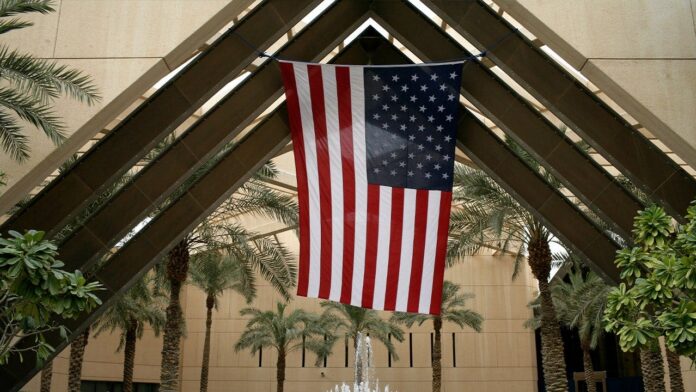
The Trump administration ordered non-emergency American government workers and their families out of Saudi Arabia as Iran-backed Houthi attacks killed at least 13 people and wounded over 300 at a major airport in Riyadh, with President Trump now weighing direct military strikes against the militant group.
Deadly Escalation Forces Emergency Withdrawal
The State Department issued an ordered departure for all non-emergency personnel from Saudi Arabia as Houthi missile and drone strikes more than doubled in a single week this month. Airports across Saudi Arabia, including facilities in Riyadh, Jizan, Najran, Dammam, and Abha, have been targeted since October 5. The deadliest attack struck King Khalid International Airport in Riyadh, killing 13 civilians and injuring more than 300 others while disrupting air travel across the kingdom.
State Department officials confirmed the Iranian-backed Houthis have increasingly attacked civilian airports and critical infrastructure, resulting in civilian casualties and severe travel disruptions. The escalating violence has left American personnel in potential danger as the militant group expands its missile and drone campaign against Saudi cities, airports, and energy facilities.

The move comes as the U.S. and Israeli militaries have drawn up specific plans for renewed strikes on Iran after next month’s midterm

Global Scramble for Missile Defense
Secretary of State Marco Rubio revealed Tuesday that interceptor missiles have become the most in-demand defense product globally as nations struggle to counter the intensifying attacks. Saudi Arabia, Israel, and the United States all need additional interceptors, but global supplies are strained. Riyadh has requested more missile defense systems from Washington while also securing support from Britain, which announced deployment of Typhoon fighter jets. Egypt is providing assistance, and Israel has offered help defending Saudi territory.
The crisis exposes a troubling reality: relatively inexpensive drones and missiles can overwhelm even the most sophisticated air defenses. A research fellow at Chatham House explained that Saudi Arabia’s vast geography makes protection extremely difficult, allowing a small nonstate actor to impose enormous costs without spending much themselves.
Trump Considers Direct Military Action
President Trump told reporters earlier this month that the United States may join Saudi strikes against Houthi targets in Yemen. The administration conducted a two-month bombing campaign against the group in 2025 before halting operations following an agreement brokered by Oman. Now, with American personnel being evacuated and civilian casualties mounting, Trump faces renewed pressure to take decisive action against the Iran-backed militants threatening a key Middle Eastern ally and regional stability.