
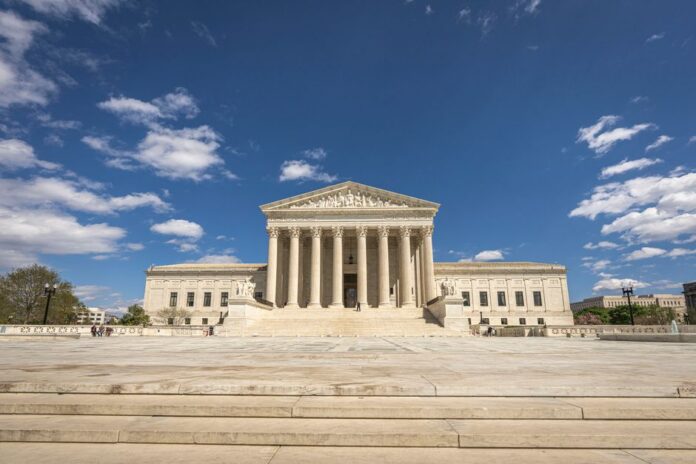
Supreme Court Case Selection: Why Justices Hear Some Cases
Supreme Court Case Selection: Why Justices Hear Some Cases
By Newsroom, National Desk — Published August 26, 2026
Table of Contents
- How Supreme Court Case Selection Actually Works
- What Makes a Case Certworthy
- Strategic Considerations and the Politics of the Docket
- What Doesn’t Get Heard and Why It Matters
- Frequently Asked Questions
Each year, thousands of parties ask the Supreme Court to review their cases. The justices agree to hear fewer than a hundred. This selection process shapes American law, federal court rulings, and national policy updates in ways that ripple through every corner of Washington DC politics and beyond. Understanding why a supreme court case makes it onto the docket—while thousands of others don’t—reveals how nine individuals exercise enormous discretion over which constitutional questions, interstate issues, and homeland security disputes get definitive answers.
The mechanics are deceptively simple. The outcome determines which conflicts over congressional legislation, federal budget disputes, and questions of national security and defense reach final resolution. It’s a gateway that controls access to the nation’s highest judicial authority.
How Supreme Court Case Selection Actually Works
The formal process begins with a petition for certiorari—a request asking the Court to review a lower court’s decision. Most petitions arrive after a federal appeals court or a state supreme court has ruled. Parties file thick briefs arguing why their case deserves the Court’s attention. The justices and their clerks review these petitions in conferences held behind closed doors.
Four votes are enough. If four of the nine justices agree a case warrants review, it gets added to the docket. This “Rule of Four” means a minority can force consideration of an issue, even if a majority initially seems uninterested. It’s a threshold designed to prevent a simple majority from completely controlling the agenda.
The Court receives roughly 7,000 to 8,000 petitions annually. It grants cert—the shorthand term—in only about 80 to 100 cases. That’s a success rate hovering around one percent. The justices offer no explanations when they deny cert. A denial doesn’t mean the lower court got it right; it simply means the Supreme Court declined to weigh in.
What Makes a Case Certworthy
Certain factors dramatically increase a petition’s odds. Circuit splits top the list. When two or more federal appeals courts reach contradictory conclusions on the same legal question, the justices face pressure to resolve the conflict. Federal agencies and regulations can’t operate coherently when the rule differs depending on geography. A business might face one standard in the Ninth Circuit and another in the Fifth.
Significance matters too. Cases involving fundamental rights, major questions of constitutional law, or broad national affairs coverage naturally attract attention. A dispute about an obscure procedural rule affecting a single litigant will almost always lose out to a case that could reshape how federal elections and campaigns operate or how national infrastructure projects navigate environmental review.
The federal government’s position carries weight. When the Solicitor General—the lawyer representing the United States before the Court—files a petition or urges the justices to hear a case, they listen. The federal government appears before the Court more than any other party and enjoys a substantially higher cert grant rate than private litigants.
Novel or recurring issues also catch the justices’ eyes. If lower courts are wrestling repeatedly with a question left unresolved by existing precedent, or if new technology or congressional legislation creates fresh legal puzzles, the Court may step in. Cross-state environmental issues that pit states against each other, or homeland security questions arising from new threats, often fit this category.
Factors That Improve Cert Odds
- A clear split among federal circuit courts on a legal question
- A state supreme court ruling that conflicts with other states or federal courts
- A decision that directly contradicts existing Supreme Court precedent
- Questions of national importance affecting federal policy and legislation
- Cases where a federal law has been struck down as unconstitutional
- Issues involving interstate commerce and trade where uniformity is essential
- Support from the Solicitor General or multiple amicus briefs from significant parties
Strategic Considerations and the Politics of the Docket
Justices don’t select cases in a vacuum. Each brings judicial philosophy, priorities, and strategic thinking to the process. A justice might vote to grant cert because she believes a lower court erred and wants to correct it. Another might vote to hear a case to establish a precedent in an area where the law remains unsettled.
Timing plays a role. Some justices may vote against granting cert if they suspect they’d be on the losing side of the ultimate decision. Why bring a case up only to cement a precedent you oppose? Conversely, a bloc of justices confident they have five votes might eagerly grant cert to lock in their preferred interpretation.
The Court also practices what observers call “percolation.” Justices sometimes let an issue simmer in lower courts for years, allowing different judges to experiment with various approaches. Once a consensus begins forming—or once the disagreement becomes untenable—the Court steps in. This patience can produce better-reasoned decisions informed by multiple perspectives.
Political branches influence the docket indirectly. When Congress passes major legislation addressing national security and defense or federal budget and fiscal policy, litigation inevitably follows. Challenges to congressional legislation create natural candidates for Supreme Court review, especially when lower courts strike down provisions or interpret statutes in conflicting ways.
What Doesn’t Get Heard and Why It Matters
The overwhelming majority of petitions fail. Many involve routine disputes where the law is settled and the lower court correctly applied it. The Supreme Court isn’t a general error-correction body. Its job isn’t to fix every mistake by a trial judge or appeals panel.
Some worthy cases get denied simply because the justices have limited bandwidth. Oral arguments, opinion writing, and the administrative work of the Court consume enormous time. The justices must prioritize. A case might present an interesting question but not rise to the level of urgency that displaces other pending matters.
Denial can leave significant uncertainty in place. If circuits split and the Court doesn’t resolve the conflict, the law remains fractured. Individuals and organizations adjust by forum-shopping or operating under a cloud of legal ambiguity. Federal agencies and regulations may apply inconsistently. The denial of cert has real consequences, even if those consequences are less visible than a landmark ruling.
This selectivity also concentrates power. Nine individuals—often just four—decide which constitutional questions get answered and which remain open. Critics argue this gives unelected judges too much control over the national policy updates that shape American life. Defenders counter that judicial restraint and careful case selection prevent the Court from overreaching.
Frequently Asked Questions
Can the Supreme Court choose to hear any case it wants?
Not exactly. The Court has broad discretion over its docket, but cases must meet basic requirements. They generally need to involve a live controversy, come from a lower court decision, and present a federal question or fall within the Court’s limited original jurisdiction. The justices can’t simply pluck a dispute out of thin air or issue advisory opinions on hypothetical scenarios.
What happens if the Supreme Court refuses to hear a case?
The lower court’s decision stands as the final word for the parties involved. That ruling becomes binding in that particular case, but it doesn’t create nationwide precedent unless it’s a federal appeals court decision, which binds lower courts within that circuit. Denial of cert has no precedential value—it doesn’t signal approval or disapproval of the lower court’s reasoning.
Why do some major national issues never reach the Supreme Court?
Several reasons explain this. Sometimes no one has legal standing to challenge a policy in court. Other times, political branches resolve the issue through congressional legislation or executive action before litigation matures. Certain questions are considered “political questions” that courts avoid, leaving them to elected officials. And sometimes the justices simply choose not to grant cert, leaving the matter unresolved at the highest level.
How much influence do law clerks have in case selection?
Considerable influence, though the extent varies by justice. Most chambers participate in the “cert pool,” where clerks divide petitions and write memos summarizing each case and recommending whether to grant or deny. Justices rely heavily on these memos given the volume of petitions. However, the justices make the final call, and some review petitions independently in areas of particular interest to them.
The Court’s case selection process remains one of its most powerful and least transparent functions. Those 80-odd cases chosen each term set the boundaries of constitutional law, define the limits of federal power, and answer questions that affect millions. The thousands rejected fade into obscurity, their legal questions left for another day—or perhaps never resolved at all. That quiet discretion, exercised in private conferences without public explanation, shapes the national affairs coverage and federal government news that define each Supreme Court term.