
Four soldiers died and 39 were injured when military commanders allowed training to continue despite knowing about a nearby wildfire for hours, raising urgent questions about decision-making protocols when troops train with live ammunition in hazardous conditions.
Command Failure Under Scrutiny
Canadian military officials acknowledged Saturday they tracked the fire’s progression but deemed it contained before sudden wind shifts sent flames racing toward 84 soldiers conducting combat exercises in Alberta. Major General Wade Rutland revealed the fire traveled over half a mile in just 36 seconds after winds changed direction unexpectedly. Troops practicing simulated attacks with live grenades and ammunition went from seeing clear skies to facing life-threatening flames in under one minute, according to commanders on scene.
The tragedy claimed Sergeant Morgan Wong and Privates Shaun Farrell, Aidan Goulding, and Hayden Lykkemark, all serving with Edmonton-based units. Nineteen soldiers remain in critical condition with severe burns requiring months of intensive treatment. The battalion was preparing for rapid global deployment and a spring mission reinforcing troops in Latvia when disaster struck during the high-intensity exercise.


Emergency Response Overwhelmed System
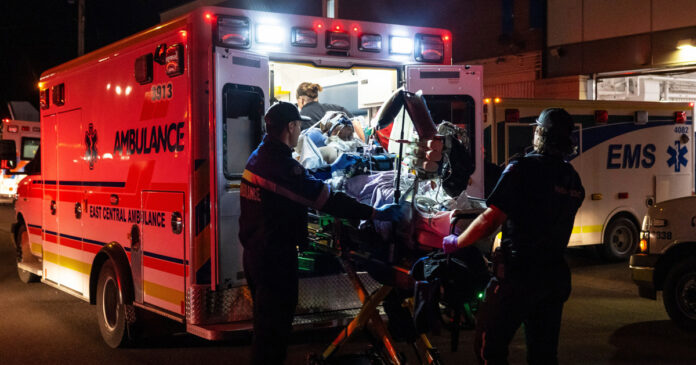
Alberta activated emergency protocols across multiple hospitals as 22 ambulances, six airplanes, and two helicopters rushed casualties to four medical centers. Military search-and-rescue technicians parachuted into the training area shortly before midnight, their red parachutes illuminated by flares as local facilities struggled with the mass casualty event. One mother, running for mayor in Ontario, learned her eldest son was among the critically injured and immediately traveled to Alberta to reach his bedside.
What This Reveals About Training Safety
This incident represents one of the worst peacetime military tragedies on domestic soil, exposing potential gaps in weather monitoring and risk assessment during live-fire exercises. Range controllers reportedly relied on weather reports showing winds below 31 miles per hour throughout most of Saturday before conditions intensified rapidly. The investigation must determine whether existing protocols adequately protect troops when natural hazards intersect with combat training involving live ammunition. Military families deserve answers about why training continued despite known fire danger in the area, particularly when soldiers cannot quickly evacuate during live-fire scenarios.