
Entertainment Industry Unions: What They Do for Workers
By Newsroom, Entertainment Desk — Published July 31, 2026
Table of Contents
- The Major Players in Entertainment Labor
- Working Conditions and Safety Protections
- What Unions Can’t Control
- The Changing Landscape of Entertainment Work
- Frequently Asked Questions
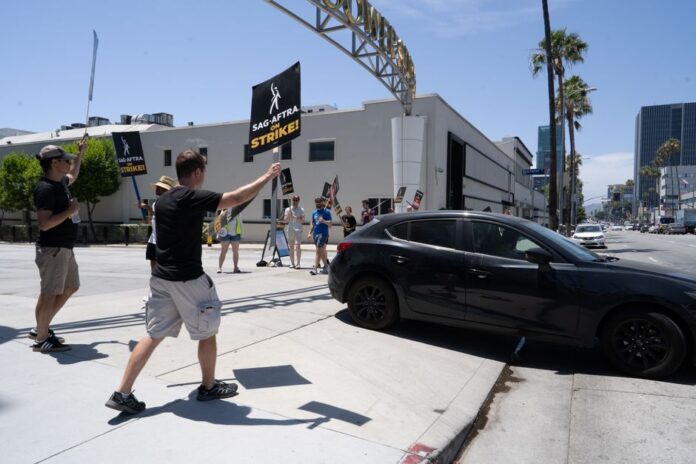
When Hollywood news breaks about a strike or contract negotiation, entertainment industry unions suddenly dominate headlines alongside celebrity updates and box office results. But even when the cameras aren’t rolling on picket lines, these organizations shape every aspect of how film reviews, TV series premieres, music chart rankings, and streaming platforms come to life. Understanding what these unions actually do—and why they matter—reveals the machinery behind the pop culture commentary and entertainment awards that fill our feeds.
At their core, entertainment industry unions are labor organizations that collectively bargain on behalf of workers who might otherwise negotiate alone with powerful studios, networks, and production companies. They set minimum pay scales, working conditions, health benefits, and pension contributions. Without them, the creative and technical professionals who produce the content we consume would face an industry structured entirely around employer leverage.
The Major Players in Entertainment Labor
Several unions cover different crafts and roles across film, television, and digital media. The Screen Actors Guild-American Federation of Television and Radio Artists represents performers—the faces you see in movie releases and box office hits, the voices in animated features, the hosts of talk shows. Directors and assistant directors have their own guild. Writers who craft the scripts behind television shows and streaming series have a separate union. Below the line, unions represent cinematographers, editors, costume designers, makeup artists, set decorators, and scores of other specialized trades.
Each union negotiates its own contracts, typically every few years, with the Alliance of Motion Picture and Television Producers or other employer groups. These contracts cover not just wages but residuals—the payments that continue when a show reruns or a film streams years later. Residuals have become a flashpoint as streaming platforms upend traditional revenue models, making it harder for workers to earn a living from hit shows that millions watch but generate opaque backend payments.
Music industry unions operate somewhat differently. Session musicians, orchestral players, and background vocalists have union protection, but major recording artists typically negotiate individually or through management, relying on leverage from their own star power rather than collective bargaining. This creates a bifurcated system where top names on music chart rankings operate outside union structures while the professionals who support them—studio musicians, engineers, tour crews—depend on union standards.
Health Insurance and Pension Systems
One of the most tangible union benefits is access to health coverage. Entertainment work is notoriously inconsistent. An actor might book a recurring role on a TV series premiere, work steadily for months, then face a year without employment. A cinematographer might jump from project to project with gaps in between. Unions pool contributions from all covered work to provide health insurance that doesn’t disappear the moment a job ends. Members typically need to earn a minimum amount in covered work each year to qualify, but the system provides continuity that individual workers could never afford on their own.
Pension plans work similarly. Employers contribute a percentage of wages into union-managed funds. Over a career of covered work—even if that career involves dozens of different employers and productions—the contributions accumulate. For freelancers who never stay with one company long enough to vest in a traditional corporate pension, this pooled system is often the only path to retirement security.
Working Conditions and Safety Protections
Union contracts set rules that might seem mundane but profoundly affect daily life on set. Turnaround time—the hours between the end of one workday and the start of the next—prevents exhaustion-driven accidents. Meal breaks, overtime rates, and limits on consecutive workdays all exist because unions negotiated them. When behind-the-scenes production news occasionally surfaces about unsafe conditions or abusive schedules, it’s often on non-union productions or in cases where contract terms were violated.
Stunt work, special effects, and location shooting all carry inherent risks. Union safety protocols, developed over decades and informed by past tragedies, require coordinators, protective equipment, and procedures designed to let performers and crew go home uninjured. These standards raise production costs, which is precisely why some employers resist them—and why unions insist on enforcement.
The Jurisdictional Puzzle
Entertainment production doesn’t respect neat boundaries. A single project might involve performers covered by one union, writers by another, and two dozen technical crafts each with their own. Jurisdictional disputes—arguments over which union covers a particular task—occasionally flare up. Is operating a camera on a reality show a job for the cinematographers’ union or a separate broadcast union? The answers matter because they determine which contract applies, which wage scales govern, and which workers get the call.
Streaming platforms and digital content have complicated these lines further. When a production is destined for a streaming platform rather than traditional theatrical release or broadcast, should the same contract terms apply? Unions argue yes, pointing to audience size and corporate profits. Employers often push for lower-budget agreements, arguing that streaming economics differ from legacy models. These tensions play out in contract negotiations and sometimes in public battles that spill into entertainment industry trends coverage.
What Unions Can’t Control
Union power has limits. They can’t force employers to greenlight projects or hire specific workers. They can’t guarantee anyone a job. Membership doesn’t mean steady employment—it means that when you do work on a union production, certain standards apply. Many union members spend significant time unemployed or take non-union gigs to pay bills between covered jobs.
Unions also face challenges from runaway production. If a studio can shoot in a jurisdiction with lower costs and weaker labor protections, union standards in Los Angeles or New York matter less. Tax incentives offered by states and countries explicitly to attract production have shifted work away from traditional entertainment hubs, sometimes to places where union presence is weaker or nonexistent. This global competition constrains what unions can demand without pricing their members out of work entirely.
Creative rights present another boundary. Unions negotiate pay and conditions, but they don’t control creative decisions. A writers’ union can secure better wages and residuals, but it can’t force a studio to produce a particular script or prevent interference with a writer’s vision. Similarly, actors’ unions protect performers’ working conditions but don’t dictate casting choices beyond requiring fair audition processes.
The Changing Landscape of Entertainment Work
Streaming platforms have fundamentally altered the economics that underpin union contracts. Traditional television produced seasons of twenty-plus episodes, providing months of steady work. Streaming series often run eight to ten episodes. Shorter seasons mean less work for writers, actors, and crew. Residual formulas designed for syndication and international sales don’t translate neatly to a model where a platform pays a flat licensing fee or produces content in-house.
The rise of content creation outside traditional studio systems—YouTubers, podcasters, social media influencers—has created an entire entertainment ecosystem that operates without union structures. Some of this work involves small-scale solo operations that wouldn’t fit traditional collective bargaining. But as digital content professionalizes and involves larger teams and budgets, questions arise about whether and how union models might extend to these spaces.
Animation and visual effects present ongoing challenges. Much of this work can be done remotely and has increasingly moved to studios around the world with lower labor costs. Visual effects artists in particular have struggled to organize effectively, despite working on the biggest box office results and most celebrated entertainment awards contenders. The technical nature of the work, the global labor pool, and the project-based structure of VFX studios have all complicated unionization efforts.
Frequently Asked Questions
Do you have to join a union to work in entertainment?
No. Plenty of entertainment work happens on non-union productions, particularly in independent film, digital content, and regional markets. However, major studio films, network television, and high-budget streaming productions are typically union jobs. Once you work on a union production, you’re generally required to join the relevant union and pay dues. Some unions operate as closed shops where membership is required before you can be hired for covered work, though the specifics vary by union and jurisdiction.
How do union minimums compare to what people actually earn?
Union contracts set floors, not ceilings. A-list actors, directors, and writers negotiate well above scale, sometimes earning millions per project. But for working professionals without star leverage—day players, guest stars, staff writers, crew members—union minimums often represent their actual pay. These minimums ensure that even small roles or short-term jobs provide livable wages and trigger benefit contributions. Without them, employers could offer whatever they wanted, and individual workers would have little bargaining power.
What happens if a production violates union rules?
Unions can file grievances on behalf of members, potentially leading to arbitration. Violations might result in back pay, penalties, or other remedies. In extreme cases, unions can fine productions or, theoretically, call strikes, though that’s a last resort given the economic damage to members. The effectiveness of enforcement depends on union resources, the willingness of members to report violations, and the specifics of the contract language. Some violations are easier to prove and remedy than others.
Are entertainment unions different from other labor unions?
The core function—collective bargaining for better pay and conditions—is the same. But entertainment unions face unique challenges. Work is project-based and freelance rather than steady employment with one company. Workers move between employers constantly. Success is highly unequal, with a few stars earning exponentially more than typical members. And the product is creative, raising questions about artistic control that don’t arise in manufacturing or service industries. These factors shape how entertainment unions operate and what they can realistically achieve.
The next time Hollywood news covers a labor dispute or contract negotiation, remember that the stakes extend far beyond delayed movie releases or interrupted TV series premieres. These battles determine whether the people who create the entertainment we consume can afford health care, save for retirement, and work under safe conditions. The unions fighting those battles operate imperfectly, navigating complex economics and creative egos, but they remain the primary mechanism ensuring that entertainment work provides not just glamour for a few but sustainable livelihoods for thousands.