
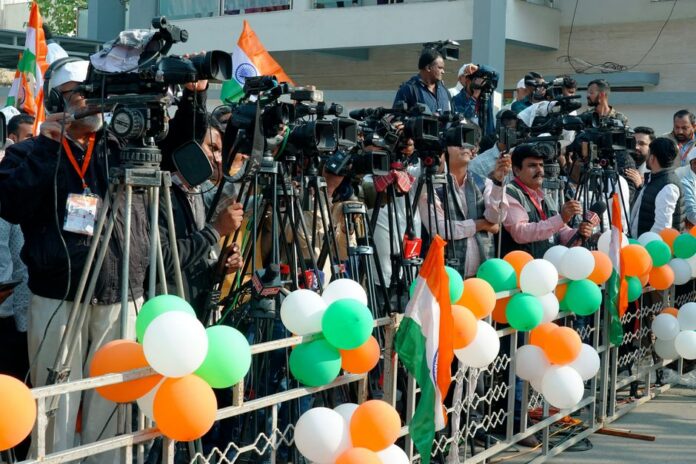
Breaking News Verification: How Journalists Fact-Check
By Newsroom, Staff Report — Published August 26, 2026
Table of Contents
- The First Rule: Breaking News Verification Starts With the Source
- Cross-Referencing and the Two-Source Rule
- Visual Verification: When Seeing Isn’t Always Believing
- Official Statements and the Verification Paradox
- Real-Time Corrections and Transparency
- Frequently Asked Questions
When a major story breaks—a natural disaster, a political resignation, an act of violence—the first reports often contain errors. In the rush to inform the public, details get scrambled, sources misunderstood, rumors amplified. Breaking news verification is the discipline that separates professional journalism from the rumor mill. It’s the process reporters use to confirm facts, authenticate sources, and ensure that what reaches readers is as accurate as possible, even when events are unfolding in real time.
The stakes are high. False information spreads faster than corrections, and a single mistake can erode trust, panic communities, or even endanger lives. Understanding how journalists verify breaking news helps readers evaluate the headlines they see and recognize the difference between a carefully reported update and unconfirmed speculation.
The First Rule: Breaking News Verification Starts With the Source
Every fact needs a source. That sounds simple, but in practice it’s where verification begins and often where it gets complicated. When a reporter hears about a developing story—maybe from a tip, social media, or a scanner—the first question is always: who says so, and how do they know?
Journalists distinguish between primary and secondary sources. A primary source has direct knowledge: the eyewitness at the scene, the official who issued the order, the document that records the transaction. Secondary sources relay information they heard elsewhere. The goal is to get as close to primary sources as possible. A tweet from a bystander claiming there’s been an explosion is a starting point, not confirmation. A statement from the fire department, or a reporter who has arrived on scene and can verify damage, moves the story from rumor to reportable fact.
Newsrooms also evaluate source credibility. Is this person in a position to know what they claim? Do they have a track record of reliability? Are they speaking on the record, or anonymously? Anonymous sources can be valuable, especially when they risk retaliation for speaking out, but editors typically require corroboration from at least one additional independent source before publishing sensitive information based solely on unnamed accounts.
Cross-Referencing and the Two-Source Rule
Professional news organizations rarely run with a single source on breaking stories, especially when the information is dramatic or consequential. The two-source rule—requiring independent confirmation from at least two separate sources—is a cornerstone of verification. Independent is the key word. If two people are repeating the same rumor they both heard third-hand, that’s not confirmation. True independence means each source has their own direct knowledge or access to the facts.
In practice, this can slow down reporting. While competitors rush to be first, a newsroom committed to accuracy will hold a story until it can verify the core facts. That’s why you sometimes see one outlet report a detail that others haven’t yet confirmed. It doesn’t always mean the first outlet is wrong, but it does mean other newsrooms are still working their sources.
Reporters also cross-reference information across different types of sources. If a government official announces a policy change, a journalist might check the actual policy document, speak to affected parties, and consult independent experts to understand the implications. This triangulation helps catch errors, misstatements, or missing context that a single source might not reveal.
Visual Verification: When Seeing Isn’t Always Believing
Photos and videos flood social media during breaking news events. Some are genuine. Many are old, misattributed, or digitally manipulated. Verifying visual content has become a specialized skill.
Journalists use several techniques to authenticate images and video:
- Reverse image search: Tools allow reporters to upload a photo and find where else it appears online. If a dramatic image supposedly from today’s protest actually appeared two years ago in another country, that’s a red flag.
- Geolocation: Landmarks, street signs, shadows, weather conditions—details in a photo can confirm or disprove where it was taken. Specialists compare visual clues against satellite imagery and maps.
- Metadata analysis: Digital files contain information about when and where they were created, though this data can be stripped or altered.
- Source vetting: Who posted the image? Do they have a history of sharing reliable content from that location? Can the reporter reach them directly to confirm details?
Deepfakes and sophisticated editing tools have raised the bar. Newsrooms increasingly rely on forensic analysis, looking for telltale signs of manipulation—inconsistent lighting, unnatural edges, audio that doesn’t match lip movements. When in doubt, they don’t publish.
Official Statements and the Verification Paradox
Government agencies, corporations, and institutions issue statements during breaking news. These are easy to verify in one sense—you can confirm that the statement was made—but they present a subtler challenge. Just because an official said something doesn’t make it true.
Journalists report official statements, but they also contextualize them. If police say they’ve arrested a suspect, that’s verifiable and newsworthy. If the same statement includes claims about the suspect’s motive that haven’t been proven, responsible reporters will note that the motive is according to police, not established fact. This distinction matters. Readers need to know what’s confirmed and what’s still an assertion.
The verification paradox is that official sources are often the fastest and most quotable, but they may have incomplete information, institutional biases, or strategic reasons to frame events a certain way. Good journalism verifies not just that a statement was made, but tests its accuracy against other evidence and sources.
Real-Time Corrections and Transparency
Even with rigorous verification, errors slip through during breaking news. Information changes. Early reports prove wrong. Sources turn out to be mistaken. What separates credible news organizations from unreliable ones isn’t perfection—it’s how they handle mistakes.
Reputable outlets correct errors promptly and transparently. Online stories get updated with a note explaining what changed and why. Broadcasts acknowledge the correction on air. This transparency builds trust. Readers understand that breaking news is a process, and they can see the journalism improving in real time as facts become clearer.
Some newsrooms now publish “what we know and don’t know” summaries during major developing stories. This approach acknowledges uncertainty openly rather than pretending to have all the answers. It’s a more honest reflection of how information emerges during fast-moving events.
Frequently Asked Questions
Why do different news outlets sometimes report conflicting details about the same breaking story?
News organizations may have access to different sources, or they may apply different standards for what they consider verified. One outlet might publish information from a single official source, while another waits for additional confirmation. Conflicting details also emerge because early information is often incomplete or mistaken, and different newsrooms update their reporting at different speeds as new facts come in. This is why checking multiple credible sources and waiting for stories to develop can give you a clearer picture.
How can readers tell if a breaking news story has been properly verified?
Look for specific sourcing. Reliable stories name their sources when possible or explain why sources are anonymous. They distinguish between what’s confirmed and what’s claimed. Phrases like “according to” or “officials say” signal attribution. Be wary of stories that present dramatic claims without saying how the reporter knows. Check whether the outlet has a reputation for accuracy and whether they issue corrections when they make mistakes. Stories with vague sourcing or no named sources at all deserve skepticism.
What should I do if I see breaking news on social media before traditional news outlets report it?
Treat it as unconfirmed until credible news organizations verify it. Social media is often faster but far less reliable. Before sharing, ask yourself: Is there a credible source? Does the account posting it have a track record? Can I find corroboration from a news outlet I trust? Waiting even a few minutes can prevent spreading misinformation. If the story is real and significant, professional journalists will report it soon enough with verified details.
Do journalists ever decide not to report something true because they can’t verify it quickly enough?
Yes, and this is a deliberate choice. If a reporter hears something that seems credible but can’t independently confirm it through multiple sources, many newsrooms will hold the story rather than risk publishing unverified information. Speed matters in breaking news, but accuracy matters more. Sometimes this means a story doesn’t get reported until hours or even days later, once verification is complete. Other times, information that can’t be verified simply never gets published, even if it turns out to be true, because the journalistic standard demands evidence, not hunches.
Breaking news verification isn’t a perfect science. Reporters work under time pressure, with incomplete information, and sometimes make mistakes. But the methods they use—multiple sourcing, cross-referencing, visual authentication, transparent corrections—represent a commitment to accuracy that distinguishes journalism from gossip. For readers navigating an endless stream of updates and alerts, understanding this process is the best defense against misinformation and the key to staying informed when it matters most.