
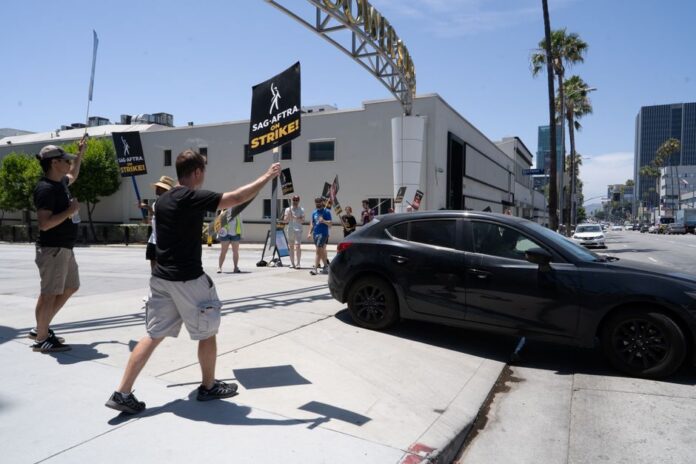
Entertainment Union Strikes: Why Labor Disputes Shut Down
By Newsroom, Entertainment Desk — Published August 25, 2026
Table of Contents
- How Entertainment Union Strikes Differ from Other Labor Actions
- Core Issues That Trigger Strikes
- The Economic Calculus Behind Walking Out
- Ripple Effects Across the Entertainment Ecosystem
- Frequently Asked Questions
When cameras stop rolling and sound stages go dark across Hollywood, the ripple effects reach far beyond the studios. Entertainment union strikes have the power to halt billion-dollar productions, delay television series premieres, reshape streaming platforms’ release calendars, and fundamentally alter the landscape of film reviews, music chart rankings, and box office results. Understanding why these labor disputes erupt—and why they wield such extraordinary leverage—requires looking at the unique economics and power dynamics of an industry built on collective creativity.
The entertainment industry depends on hundreds of specialized roles working in precise coordination. A single production might employ writers, directors, actors, cinematographers, editors, costume designers, set builders, sound engineers, and dozens of other crafts. When any one of these groups withdraws its labor, the entire machinery grinds to a halt. That interdependence gives entertainment unions remarkable bargaining power, but it also means strikes carry enormous financial stakes for everyone involved.
How Entertainment Union Strikes Differ from Other Labor Actions
Most industries can limp along during a strike. A manufacturer might use management to operate machinery at reduced capacity. A transit system might run limited service. Entertainment production offers no such flexibility. You cannot make a television show without writers. You cannot film without actors. The work is inherently collaborative and creative, resistant to replacement labor in ways that assembly-line work is not.
This creates what labor economists call a high-leverage situation. When writers walk off the job, studios cannot simply hire temporary replacements to churn out scripts. The quality would be immediately apparent to audiences, damaging the very product being sold. Actors possess unique marketability—their faces, voices, and star power are the product itself. These realities give entertainment unions negotiating strength that workers in more easily replaced positions lack.
The financial architecture of the industry amplifies this leverage. Studios operate on tight production schedules tied to release windows, advertising campaigns, and contractual obligations with streaming platforms and theater chains. A delay of even weeks can cascade into millions in lost revenue, rescheduled marketing buys, and breached contracts. Productions carry massive fixed costs—sets built, locations secured, crew hired—that burn money whether cameras are rolling or not.
Core Issues That Trigger Strikes
While each labor dispute has its specific triggers, certain themes recur across entertainment union strikes. Compensation structures top the list. The shift from traditional broadcast and theatrical releases to streaming platforms has upended decades-old payment models. Residuals—ongoing payments when content is reused or rebroadcast—formed a crucial part of many entertainment workers’ income. Streaming’s subscription model, where content lives in perpetual libraries rather than being sold per-view, has complicated these formulas.
Writers and actors have pushed for new frameworks that account for a show’s popularity on streaming services, measured by viewing hours or subscriber retention. Studios have resisted, citing competitive sensitivities around releasing detailed viewership data. This information asymmetry—where one side knows exactly how valuable the product is while the other side bargains in partial darkness—creates inherent tension.
Working conditions represent another flashpoint. The prestige television era and streaming platforms’ appetite for content have intensified production schedules. What used to be a 22-episode broadcast season stretched across nine months might now be a 10-episode streaming season shot in four. Writers’ rooms shrink in size and duration. The compressed timelines can mean brutal hours and fewer employment weeks across a year, even as the final product generates substantial value.
Technological change introduces existential questions. The emergence of artificial intelligence tools capable of generating scripts, deepfaking performances, or digitally recreating actors’ likenesses raises profound questions about creative ownership and labor displacement. Unions seek contractual protections ensuring human writers and performers remain central to production, while studios want flexibility to use new tools. These debates touch on fundamental questions about what creative work is and who controls it.
Common Strike Demands Include
- Higher base compensation rates that reflect current industry economics and cost of living increases
- Reformed residual structures for streaming content that account for viewership and platform success
- Minimum staffing levels for writers’ rooms and guaranteed employment durations
- Health and pension contribution increases to maintain benefits as costs rise
- Restrictions on using artificial intelligence to replace or diminish human creative work
- Transparency requirements around viewership data to enable informed bargaining
The Economic Calculus Behind Walking Out
Strikes impose immediate hardship on the workers who initiate them. Entertainment industry employment is already precarious for many. Most writers, actors, and below-the-line crew work project to project without guaranteed annual income. Walking away from available work means financial strain, potentially for months.
Unions typically build strike funds to provide some support, but these payments rarely match regular earnings. The calculation involves weighing certain short-term pain against potential long-term gains. If a new contract secures better residuals, that income stream continues for years. If it establishes new norms around AI use, it might protect entire career paths from obsolescence.
Studios face their own calculus. Accepting union demands means higher ongoing labor costs across all productions. But prolonged strikes halt revenue entirely, create chaos in release schedules, and risk losing talent to competing studios or platforms willing to settle. The decision often comes down to whether management believes unions will hold out long enough to make concessions cheaper than continued shutdown.
Public opinion and political pressure can shift these calculations. Entertainment workers generally enjoy public sympathy in ways that complicate union-busting tactics. Audiences understand creative work as skilled labor. Celebrity involvement in strikes generates media coverage that keeps pressure on studios. Local economies dependent on production—restaurants, equipment rentals, support services—create political constituencies for resolution.
Ripple Effects Across the Entertainment Ecosystem
When production stops, the consequences radiate outward. Television networks and streaming platforms face content gaps in their schedules. Late-night talk shows go dark immediately, followed by scripted series as episode inventories deplete. Film releases get postponed, affecting box office results and theater revenues. Entertainment awards shows may lack new content to celebrate, and pop culture commentary shifts to recycling older material or focusing on music chart rankings and international productions unaffected by Hollywood labor actions.
Below-the-line workers—crew members not part of the striking union—face unemployment through no choice of their own. A camera operator or set carpenter cannot work if there is no production happening. These workers often lack the financial cushion to weather extended shutdowns, creating hardship that strikes are not intended to cause but inevitably do.
The broader cultural impact emerges over time. Prolonged strikes can shift audience habits. Viewers who turn to international content, video games, or other entertainment during a shutdown may not fully return. Studios may accelerate moves toward non-union production centers or foreign locations. The very leverage that makes strikes effective can, if overused, encourage structural changes that weaken unions’ long-term position.
Frequently Asked Questions
Why can’t studios just hire replacement workers during entertainment strikes?
The creative and collaborative nature of entertainment production makes replacement labor largely ineffective. Writers and actors bring unique talents, established fan relationships, and creative vision that cannot be quickly substituted. Using non-union replacements would likely produce inferior content that audiences reject, defeating the entire purpose. Additionally, crossing picket lines can permanently damage careers in an industry built on relationships and reputation.
How do entertainment union strikes affect workers who are not part of the striking union?
Non-striking crew members—including camera operators, editors, set builders, costume designers, and many others—typically cannot work when production halts, even though they are not party to the labor dispute. These workers face unemployment without strike pay or union support, creating significant financial hardship. This collateral impact often increases pressure on both sides to reach resolution quickly.
What role do streaming platforms play in modern entertainment labor disputes?
Streaming platforms have fundamentally altered entertainment economics by replacing per-view or advertising-based revenue models with subscription services. This shift has complicated traditional residual payment structures and made viewership data a contentious bargaining issue. Platforms’ reluctance to share detailed performance metrics creates information imbalances that complicate negotiations, while their appetite for content has intensified production schedules and changed employment patterns for creative workers.
How long do entertainment union strikes typically last?
Duration varies widely based on the issues at stake, financial reserves on both sides, and broader economic conditions. Some strikes resolve in weeks once both parties recognize the costs of continued shutdown. Others extend for months when fundamental structural issues are being contested. The length often depends on whether negotiations involve incremental improvements to existing frameworks or attempts to establish entirely new models for compensation and working conditions.
Entertainment union strikes reveal the tension at the heart of creative industries: productions require genuine collaboration and irreplaceable human talent, yet operate within capitalist structures that seek to minimize labor costs. When those tensions become unsustainable, the same interdependence that makes entertainment production possible gives workers the power to stop it entirely. The resulting shutdowns disrupt our cultural calendar and entertainment routines, but they also represent workers asserting that the value they create should be reflected in the compensation and protections they receive.