
Documentary Filmmaking Ethics: Why Truth-Telling Has Rules
By Newsroom, Features Desk — Published August 25, 2026
Table of Contents
- The Core Tension: Representation and Reality
- The Staging Debate: Where Does Direction End and Deception Begin?
- Editorial Integrity: The Ethics of the Cutting Room
- Consent, Exploitation, and Vulnerable Subjects
- Balancing Advocacy and Accuracy
- Frequently Asked Questions
When a documentary filmmaker points a camera at reality, a paradox emerges. The medium promises truth, yet every choice—where to aim the lens, which interview to include, how to edit a sequence—shapes what viewers see. Documentary filmmaking ethics exist precisely because the genre sits at this uncomfortable intersection: part journalism, part art, part advocacy. Unlike feature stories that explicitly blend narrative techniques with reporting, or profile pieces that acknowledge their subjective lens, documentaries often claim a privileged relationship with truth itself. That claim carries obligations.
The rules governing this form aren’t mere professional niceties. They determine whether a film serves the public interest or exploits it, whether it illuminates or distorts. As audiences increasingly turn to long-form content and narrative journalism for deeper understanding of complex issues, the ethical framework behind documentary work becomes everyone’s concern.
The Core Tension: Representation and Reality
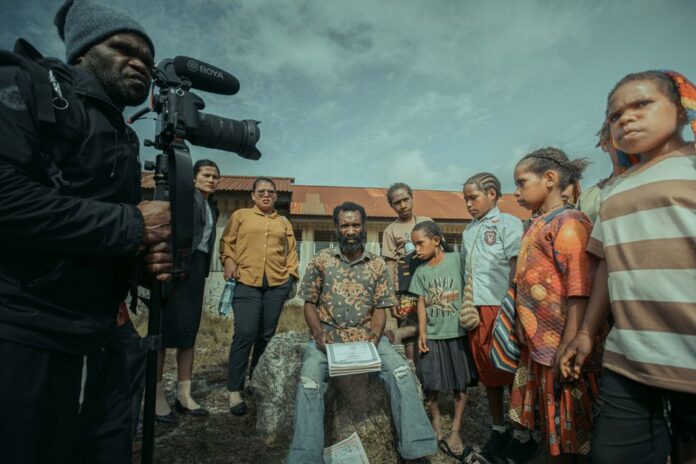
Documentary ethics begin with a deceptively simple question: who speaks, and for whom? When a filmmaker enters a community to create what might be framed as a community spotlight or cultural commentary, power dynamics shift immediately. The person behind the camera controls the final product. The subject, however cooperative, cannot.
This imbalance has produced some of documentary’s most troubling chapters. Filmmakers have staged scenes and passed them off as spontaneous. They’ve promised subjects editorial input, then delivered none. They’ve turned intimate access into sensationalism, transforming personal narratives into spectacle. The damage isn’t abstract—real people face real consequences when their lives become raw material for someone else’s vision.
Ethical practice requires transparency about this relationship from the start. Subjects deserve to understand how their participation might be used, even if the filmmaker can’t predict every editorial choice. Informed consent isn’t a single conversation; it’s an ongoing dialogue, particularly when working with vulnerable populations, minors, or people unfamiliar with how in-depth reporting translates to screen.
The Staging Debate: Where Does Direction End and Deception Begin?
Not every intervention corrupts truth. A filmmaker might ask someone to repeat an action for better lighting or clearer audio. She might request that a subject walk through a door again, or restate a thought more concisely. These technical adjustments rarely raise eyebrows. But the line blurs quickly.
Consider a documentarian covering a family’s financial struggles. If she asks them to sit at the kitchen table reviewing bills—something they do regularly—is that staging? What if she suggests they have that conversation now, even though they normally do it Wednesdays? What if the bills aren’t actually due this week, but the scene illustrates a genuine pattern?
The ethical framework hinges on intent and disclosure. Recreating typical behavior to capture what a camera missed differs fundamentally from fabricating behavior that never occurs. Some filmmakers include brief on-screen notes when scenes required direction. Others argue that all documentary involves construction, making such disclaimers either redundant or insufficient. The debate continues, but consensus holds on one point: viewers deserve to know if what they’re watching was manufactured for the camera rather than observed.
Acceptable Interventions
- Asking subjects to repeat actions for technical reasons (lighting, sound quality)
- Requesting clarification or expansion of statements during interviews
- Filming routine activities that would occur regardless of the camera’s presence
- Using archival material or photographs to illustrate historical events, clearly labeled
Problematic Practices
- Staging confrontations or events that wouldn’t naturally occur
- Paying subjects to behave in specific ways or make particular statements
- Editing interviews to reverse meaning or create false context
- Presenting reenactments as original footage without disclosure
Editorial Integrity: The Ethics of the Cutting Room
A documentary’s truth is assembled frame by frame in post-production. An editor might have 200 hours of footage to compress into 90 minutes. Every cut is a choice. Every choice has ethical weight.
The most egregious violations are obvious: splicing together sentences never spoken in sequence to fabricate quotes, or using footage from one context to illustrate another. But subtler manipulations matter too. Rearranging chronology without signaling it to viewers can distort causality. Cutting away from a subject’s qualifying statements can transform nuanced positions into absolutes. Even music cues and pacing influence interpretation in ways that might serve dramatic tension while undermining accuracy.
Responsible filmmakers working in what might be considered investigative reports or special reports recognize that editorial power demands restraint. The goal isn’t to eliminate perspective—all documentary reflects a point of view—but to ensure that structural choices don’t misrepresent what subjects actually said or did. Some practitioners share rough cuts with key subjects before finalizing the film, inviting corrections on factual errors without ceding creative control. Others reject this approach, arguing it compromises independence. Either way, the ethical commitment remains: let the editing serve clarity, not deception.
Consent, Exploitation, and Vulnerable Subjects
When documentary intersects with human interest articles or behind-the-scenes stories involving people in crisis—addiction, poverty, mental illness, trauma—ethical complexity intensifies. Someone in acute distress may technically consent to filming while lacking the capacity to fully grasp long-term implications. A person desperate for their story to be heard might agree to invasive access they’ll later regret.
Filmmakers face difficult judgment calls. Is it exploitative to film someone at their lowest point, or does bearing witness to suffering serve the public good? The answer often depends on context, relationship, and purpose. A documentary about homelessness that treats subjects as cautionary tales differs morally from one that examines systemic failures through lived experience. The former extracts drama from desperation. The latter honors dignity while pursuing accountability.
Best practices include building trust over time rather than parachuting in during crisis, maintaining contact after filming wraps, and considering whether a subject’s participation might cause harm even if they’ve consented. Children require particular care; their consent is legally insufficient, and their understanding of public exposure is limited. Filmmakers must weigh whether a child’s participation serves that child’s interest or merely the film’s narrative needs.
Balancing Advocacy and Accuracy
Many documentaries advance arguments. They investigate wrongdoing, champion causes, challenge official narratives. This advocacy isn’t inherently unethical—some of the form’s finest work combines passionate commitment with rigorous honesty. But the combination requires discipline.
A filmmaker convinced of a particular truth may unconsciously ignore contradictory evidence or fail to pressure-test their own assumptions. They might downplay inconvenient facts or give short shrift to opposing viewpoints. The result resembles propaganda more than journalism, even when the underlying cause is just.
Ethical advocacy documentaries present the strongest possible version of competing arguments before making their case. They acknowledge complexity and uncertainty. They distinguish between what’s proven and what’s suspected. They recognize that viewers deserve enough information to reach informed conclusions, even if those conclusions might differ from the filmmaker’s intent. This approach doesn’t weaken advocacy—it strengthens it by grounding passion in credibility.
Frequently Asked Questions
Do documentary filmmakers have the same ethical obligations as journalists?
The question generates ongoing debate. Many documentary filmmakers embrace journalistic standards—verification, fairness, transparency—particularly when creating work that functions as in-depth reporting or investigative journalism. Others argue that documentaries are artistic expressions with different rules, more akin to essays than news coverage. Most ethical frameworks acknowledge that while documentaries need not follow every journalistic convention, they share journalism’s fundamental obligation: don’t lie to your audience. When a film presents itself as factual, it accepts responsibility for accuracy and honesty, regardless of whether the creator identifies as a journalist.
Is it ethical to pay documentary subjects for their participation?
Payment raises concerns about authenticity and coercion. If subjects receive money for appearing, do they perform rather than behave naturally? Does compensation create pressure to deliver dramatic content? Most ethical guidelines discourage paying subjects for their stories, though reasonable exceptions exist: compensating people for time away from work, reimbursing expenses, or paying for access to private materials like photographs. The key distinction is whether money flows for participation itself or for tangible costs incurred. Transparency matters here too—viewers should know if financial relationships exist between filmmakers and subjects.
What happens when a filmmaker discovers their subject has lied to them?
This scenario tests documentary ethics in real time. The filmmaker must decide whether the deception itself becomes part of the story, whether to confront the subject on camera, or whether to abandon the project entirely. There’s no universal answer. Some lies reveal important truths about a subject’s character or circumstances. Others fundamentally undermine the film’s premise. Ethical practice requires investigating the discrepancy, considering why the lie occurred, and being honest with viewers about what was discovered and when. Simply ignoring known falsehoods to preserve a compelling narrative crosses the line from documentation to fiction.
How should filmmakers handle requests from subjects to remove or change content?
Subjects sometimes ask for scenes to be cut after viewing rough edits, citing privacy concerns, changed circumstances, or simple regret. Filmmakers must balance compassion with editorial integrity. If a subject was misled about how footage would be used, or if airing it would cause disproportionate harm relative to public interest, removal may be warranted. But subjects don’t have veto power over unflattering truths they willingly shared. The ethical path involves revisiting consent conversations, understanding the specific concern, and making decisions based on fairness rather than convenience. Some filmmakers include contract language addressing this possibility upfront, though legal agreements don’t resolve moral questions.
Documentary filmmaking’s ethical terrain shifts with technology, distribution platforms, and cultural expectations, but the core principle endures. When you claim to show reality, you accept responsibility for how you shape it. The camera doesn’t simply record truth—it constructs a version of truth through countless choices. Those choices either honor the people who trusted you with their stories, or they don’t. That’s not an artistic question. It’s a moral one.