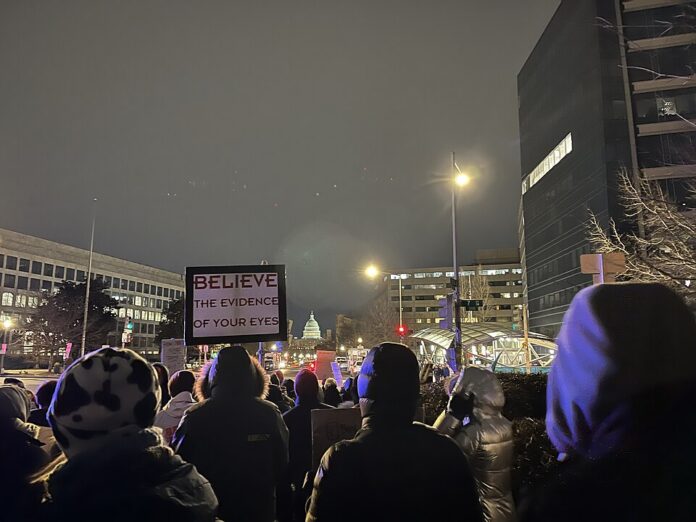
Demonstrators marched through downtown Raleigh on July 19 as part of nationwide protests against federal immigration enforcement, following two fatal officer-involved shootings during traffic stops in Texas and Maine earlier this month.
Fatal Encounters Spark Nationwide Demonstrations
The protests centered on the deaths of Lorenzo Salgado Araujo in Houston and Joan Sebastian Guerrero, age 26, in Maine. Araujo, a Mexican national, had resided in the United States for over three decades before the fatal encounter. Both incidents occurred during traffic stops conducted by immigration enforcement officers, raising questions about operational procedures and use of force protocols within federal agencies.
Organizers stated the shootings have created heightened anxiety within immigrant communities nationwide. Protesters gathered at Moore Square in downtown Raleigh, voicing opposition to current enforcement practices and calling for structural changes to how federal immigration authorities conduct operations.
Policy Debates and Enforcement Practices
The Trump administration initially directed Immigration and Customs Enforcement agents to pause traffic stops following the shootings but subsequently reversed that decision. Some demonstrators argued procedural modifications prove insufficient, with organizers explicitly calling for complete abolition of the agency rather than policy adjustments.
Protester Bob Anderson referenced multiple cases during his remarks. Organizer Victor Urquiza described community concerns about unmarked vehicles and plainclothes officers conducting enforcement operations, suggesting such tactics create confusion and fear among residents who cannot readily identify legitimate law enforcement personnel.
North Carolina Legislative Context
The demonstrations carry particular significance in North Carolina following recent passage of Senate Bill 153, which mandates state cooperation with federal immigration authorities. Governor Josh Stein vetoed the legislation, but state lawmakers overrode his veto. The measure became law approximately one month before the Raleigh protests, establishing mandatory coordination between state agencies and Immigration and Customs Enforcement operations.
The legislation represents a significant shift in state policy regarding immigration enforcement cooperation. Supporters argue the law enhances public safety through coordinated efforts, while opponents contend it undermines trust between immigrant communities and local law enforcement agencies. The nationwide protests reflect ongoing tensions between federal enforcement priorities and concerns about civil liberties and community safety practices.